
Cloud AI is too slow for a production line running at 500 units per minute. By the time a quality inspection image makes the round trip to a cloud API and back, several more units have already passed the sensor. In manufacturing, energy, logistics, and other industrial operations, latency is not a nice-to-have metric; it is the difference between catching a defect and shipping it.
Edge AI solves this by running models directly on hardware at the point of operation. There is no cloud round trip and no dependency on network availability. Inference happens in milliseconds, not seconds.
The industrial edge AI market reached $3.2 billion in 2025 and is projected to hit $14.7 billion by 2029 (MarketsandMarkets). Yet most enterprises are still figuring out where edge AI fits and how to deploy it without creating an unmanageable fleet of devices.
What Edge AI Actually Means in Industrial Context
Edge AI is the practice of running machine learning models on local hardware rather than sending data to the cloud for processing. In industrial settings, this hardware sits on or near the production floor:
- Industrial PCs with GPU acceleration mounted in control cabinets
- Dedicated AI accelerators like NVIDIA Jetson, Google Coral, or Intel Movidius
- Smart cameras with built-in inference capabilities
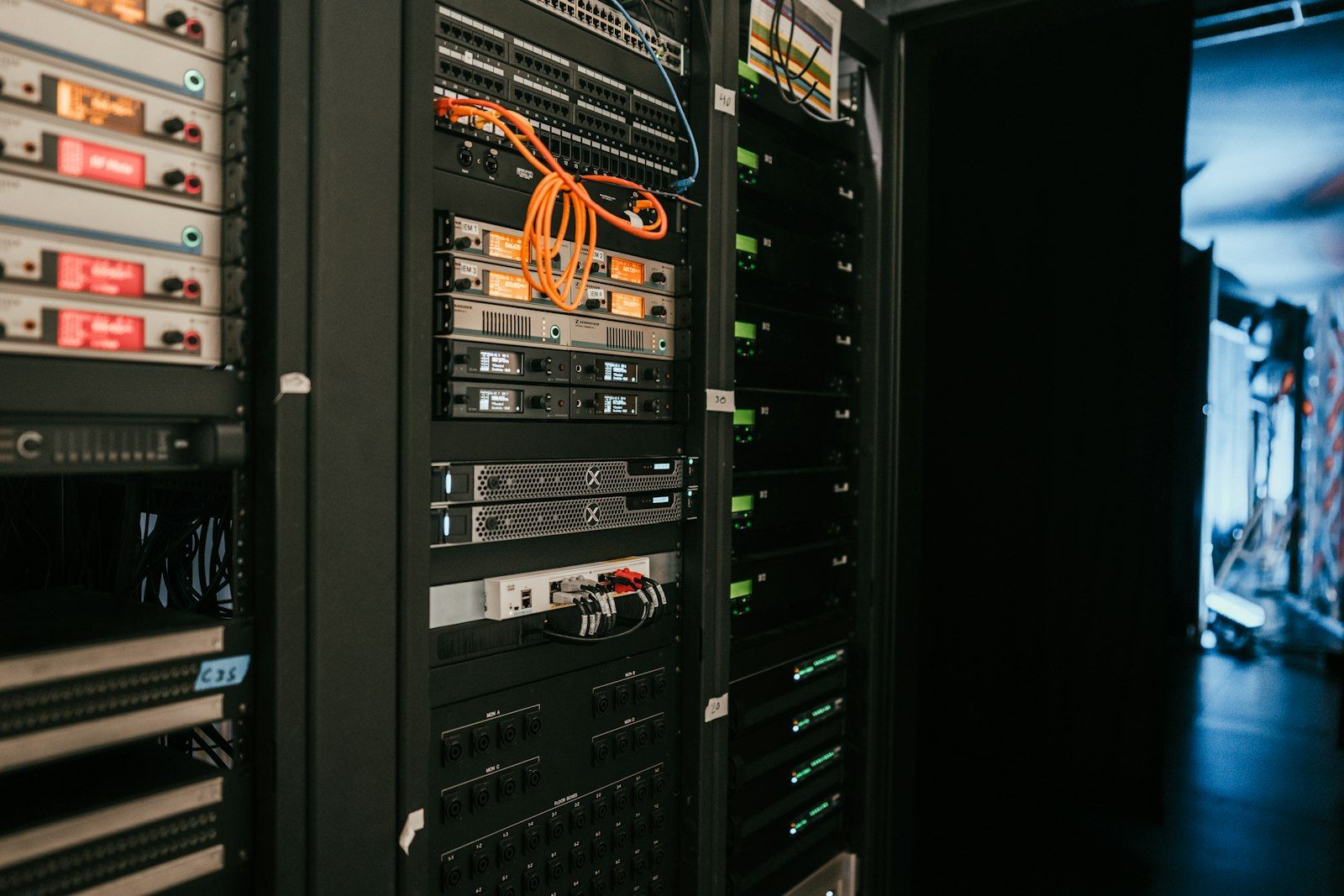
- Ruggedized edge servers designed for harsh industrial environments (dust, heat, vibration)
- PLCs and controllers with embedded AI capabilities (emerging in 2026)
The key distinction from cloud AI is that edge devices process data locally and only send results, not raw data, to the cloud. A camera inspecting welds sends simple "pass/fail" decisions to the MES, not megabytes of images to a cloud API.
Five Industrial Use Cases for Edge AI
1. Visual Quality Inspection
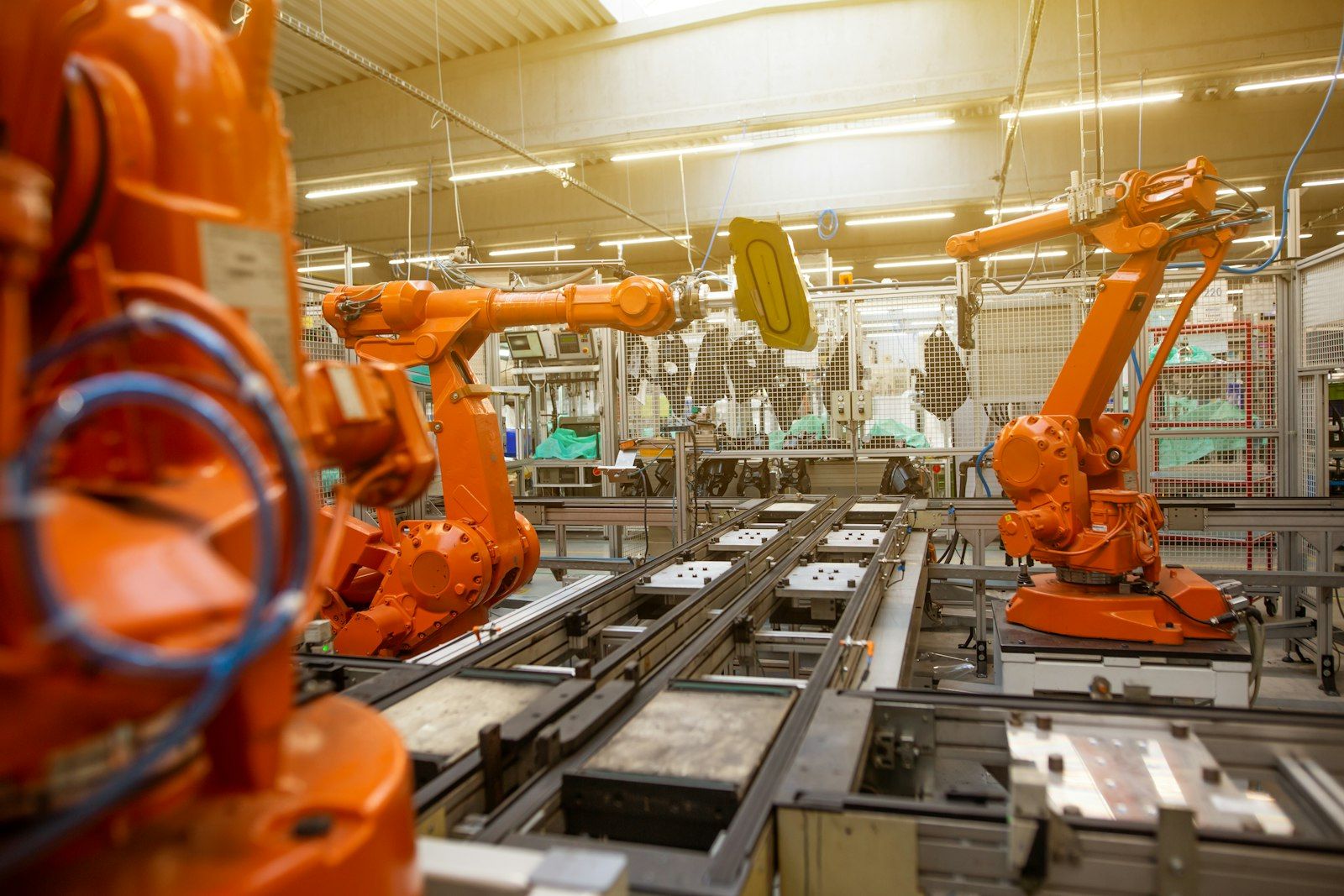
Visual inspection is the highest-value edge AI use case in manufacturing. Cameras capture images of products at line speed, and edge models classify defects in real time.
- Latency requirement: 10 to 50 ms per inference (depending on line speed)
- Typical hardware: NVIDIA Jetson Orin or industrial smart cameras
- Model type: Convolutional neural networks (CNNs) optimized for edge with TensorRT or ONNX Runtime
- Accuracy: 95 to 99% defect detection rate, compared to ~80% for manual inspection
Example: A steel manufacturer running edge-based weld inspection processes ~1,200 welds per hour with 97.3% detection accuracy. The system runs on four NVIDIA Jetson Orin modules, each handling a different camera angle.
2. Predictive Maintenance at the Machine Level
Vibration, temperature, and acoustic sensors feed data into edge models that detect early signs of equipment failure. Unlike cloud-based predictive maintenance, edge processing enables real-time alerts without network dependency.
- Latency requirement: 100 ms to 1 s (less time-critical than vision)
- Typical hardware: Industrial PCs with GPU, or dedicated vibration analysis modules
- Model type: Time-series anomaly detection (autoencoders, isolation forests, etc.)
- Data volume: Continuous sensor streams at 10 to 50 kHz sampling rates generate too much data to send to the cloud raw
Example: A chemical plant monitoring 340 rotating equipment assets uses edge AI on 12 industrial PCs to process vibration data locally. The system detected a bearing degradation pattern 18 days before failure, preventing an estimated $420,000 in unplanned downtime.
3. Safety Monitoring
Computer vision models monitor work zones for safety violations: missing PPE, unauthorized zone entry, fall risks, and equipment proximity violations.
- Latency requirement: Under 500 ms for alerts
- Typical hardware: Edge servers with GPU connected to existing CCTV infrastructure
- Model type: Object detection (YOLO variants optimized for edge)
- Privacy consideration: All processing stays on-premise. No video leaves the facility.
OSHA reports that workplace injuries cost US employers $167 billion annually. Edge AI safety monitoring reduces incident rates by 20 to 35% in facilities where it has been deployed, according to a 2025 National Safety Council study.
4. Energy Optimization
Edge models optimize energy consumption in real time by adjusting HVAC, lighting, and equipment power based on production schedules, occupancy, and weather data.
- Latency requirement: 1 to 5 seconds (control loop timing)
- Typical hardware: Building management system (BMS) controllers with AI capabilities, or edge servers connected to BMS
- Model type: Reinforcement learning or model predictive control
- Savings: 10 to 25% reduction in energy costs, according to the Department of Energy's 2025 Industrial Energy Efficiency report
Example: A food processing facility reduced its energy costs by 17% (~$340,000/year) by deploying edge AI to optimize refrigeration systems. The model adjusts compressor speeds and setpoints every 30 seconds based on production load, ambient conditions, and energy pricing.
5. Process Control Optimization
Edge AI adjusts process parameters in real time to optimize yield, quality, and throughput. This goes beyond traditional process control (e.g., PID loops) because AI models can handle multivariate optimization that traditional controllers cannot.
- Latency requirement: 10 to 100 ms (matching control loop speeds)
- Typical hardware: Industrial PCs integrated with SCADA/DCS systems
- Model type: Deep reinforcement learning, Gaussian process models, or hybrid ML + first-principles models
- Impact: 2 to 8% yield improvement, which in high-volume manufacturing represents millions in annual value
Example: A semiconductor fab using edge AI for etch process optimization achieved a 3.2% yield improvement across a product line generating $180M in annual revenue. That 3.2% translates to ~$5.76M per year from a single process step.
Edge vs. Cloud: When to Use Each
Edge AI does not replace cloud AI. They work together in a hybrid architecture.
Use edge when:
- Latency below 1 second is required
- Network connectivity is unreliable or unavailable
- Data volume is too large to transmit economically
- Data privacy or sovereignty requires on-premise processing
- Real-time control decisions are needed
Use cloud when:
- Training or retraining models (GPUs at scale)
- Running complex AI agents with large language models
- Aggregating data across multiple sites for analytics
- Tasks where latency of 2 to 10 seconds is acceptable
- Model management, versioning, and deployment orchestration
In a typical hybrid architecture, edge devices run inference locally and send summarized results to the cloud. Cloud-based systems train models, push updates to edge devices, and run analytics across the entire fleet.
Deployment Challenges and Solutions
Device Management at Scale
Managing 50 edge devices across 3 plants is manageable. Managing 500 across 20 plants is not without the right tooling.
- Use fleet management platforms such as AWS IoT Greengrass, Azure IoT Edge, or Balena to deploy, update, and monitor edge devices at scale.
- Standardize hardware. Pick 2 to 3 hardware platforms and stick with them. Heterogeneous fleets multiply support costs.
- Automate model updates. Build CI/CD pipelines that push model updates to edge devices with automated rollback if performance degrades.
Model Optimization for Edge
Models that run well in the cloud often do not fit on edge hardware. You need to optimize them for constrained compute, memory, and power.
- Quantization: Convert 32-bit floating point models to INT8 or INT4. This reduces model size by 4 to 8x with minimal accuracy loss.
- Pruning: Remove unnecessary weights and neurons. Depending on the architecture, pruning can reduce model size by 50 to 90%.
- Architecture selection: Use models designed for edge: MobileNet, EfficientNet, YOLOv8-nano, etc. Do not try to run GPT-4-class models on a Jetson.
- Framework optimization: Use TensorRT (NVIDIA), OpenVINO (Intel), or Core ML (Apple) for hardware-specific optimizations.
- Knowledge distillation: Train a small "student" model to mimic a large "teacher" model. The student model captures 85-95% of the teacher's accuracy at a fraction of the compute cost. This works especially well for domain-specific tasks where you do not need the full generality of the larger model.
The optimization step is not optional. Skipping it means either buying more expensive hardware than you need or getting worse inference performance than the use case demands. Budget time for optimization in every edge AI project plan.
Getting Started: A Practical Approach
Edge AI projects fail most often because teams try to do too much at once. A phased approach works better.
Phase 1: Pick One Use Case
Choose a single, well-defined problem with clear success metrics. Good first candidates include visual quality inspection on a production line, predictive maintenance on a specific machine type, or safety compliance monitoring (PPE detection, restricted zone alerts). Avoid starting with anything that requires real-time decision-making in safety-critical loops until you have operational experience with edge deployment.
Phase 2: Validate on Real Conditions
Lab performance never matches field performance. Test your model on real production data in actual operating conditions. Industrial environments have dust, vibration, variable lighting, and electromagnetic interference. A camera-based inspection system that works perfectly in a clean room may struggle on a factory floor with oil mist and welding flash. Allocate 3-4 weeks for field validation and expect to retrain at least once.
Phase 3: Build the Operations Layer
Before scaling past a handful of devices, invest in the infrastructure for managing edge deployments. You need over-the-air model updates, remote monitoring and diagnostics, centralized logging, and automated alerting when a device goes offline or model performance degrades. Without this operations layer, managing 50+ edge devices becomes a full-time job for someone on your team.
Phase 4: Scale Methodically
Once the first use case is running reliably and the operations layer is in place, expand to additional sites or use cases. Use the data from your initial deployment to build the business case for expansion. Real production metrics are far more convincing than vendor benchmarks when requesting budget for the next phase.
Where Edge AI Is Heading
Edge AI for industrial operations is moving from pilot projects to production infrastructure. The hardware is getting cheaper and more capable every year. The software toolchains for optimization and deployment are maturing. And the operational patterns for managing fleets of edge devices are becoming well-understood.
The organizations seeing the best results are the ones that treat edge AI as an engineering discipline, not a science experiment. They pick specific problems, validate in real conditions, build proper operations tooling, and scale based on proven results. The technology is ready. The question is whether your team has the operational maturity to deploy and maintain it at scale. Start small, prove value, and grow from there.